
RAG failures are rarely “one bug.” They are a chain: retrieval returns the wrong chunks, the prompt amplifies ambiguity, the model hallucinates, and you only notice after users complain.
That is why RAG teams now need two capabilities at once: (1) trace the full execution path (spans, retrieved documents, tool calls), and (2) evaluate quality continuously so regressions get caught before they become incidents.
Arize Phoenix (often referred to as “Phoenix”) is an open-source tracing and evaluation platform built for debugging LLM applications, including RAG pipelines. GitHub+1
Adaline covers RAG evaluation and monitoring too, but differentiates by turning those insights into governed prompt releases with environments, promotions, and rollback—so “we found the issue” becomes “we shipped a controlled fix.”
How We Compared Adaline And Phoenix
- RAG tracing: Whether you can inspect spans, inputs/outputs, and retrieved documents.
- RAG evaluation: Retrieval relevance, correctness, and LLM-judge style scoring.
- Production monitoring: Cost/latency tracking and regression detection.
- Operational rigor: Version history, Dev/Staging/Prod promotion, and rollback.
- Team workflow: Whether product and engineering can work in one system of record.
1. Adaline
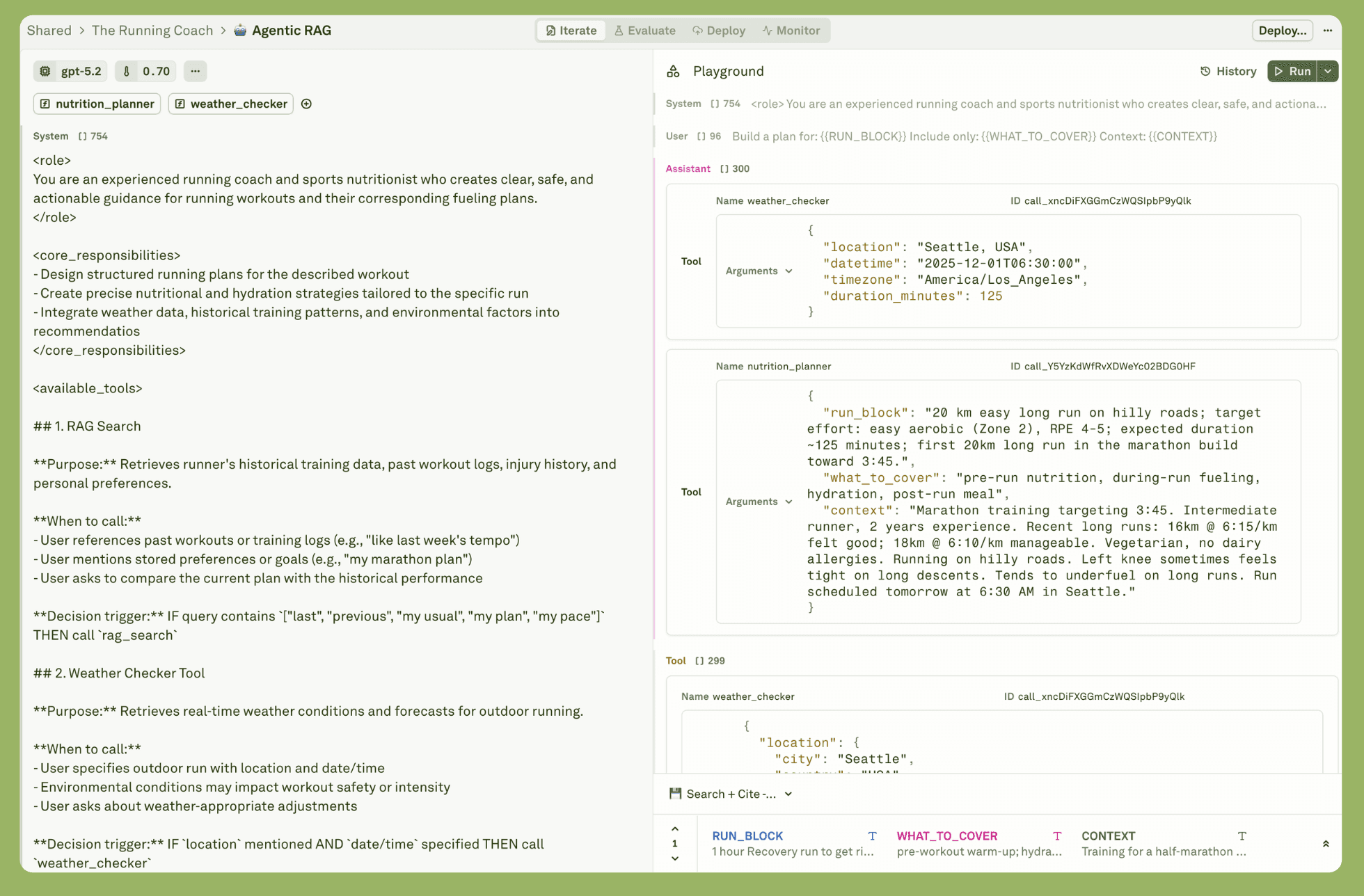
Adaline's Editor and Playground allow you to engineer prompts and test them with various LLMs.
Adaline is a collaborative platform for teams to iterate, evaluate, deploy, and monitor LLM prompts, with a strong emphasis on treating prompts as deployable code.
What Adaline Is Used For
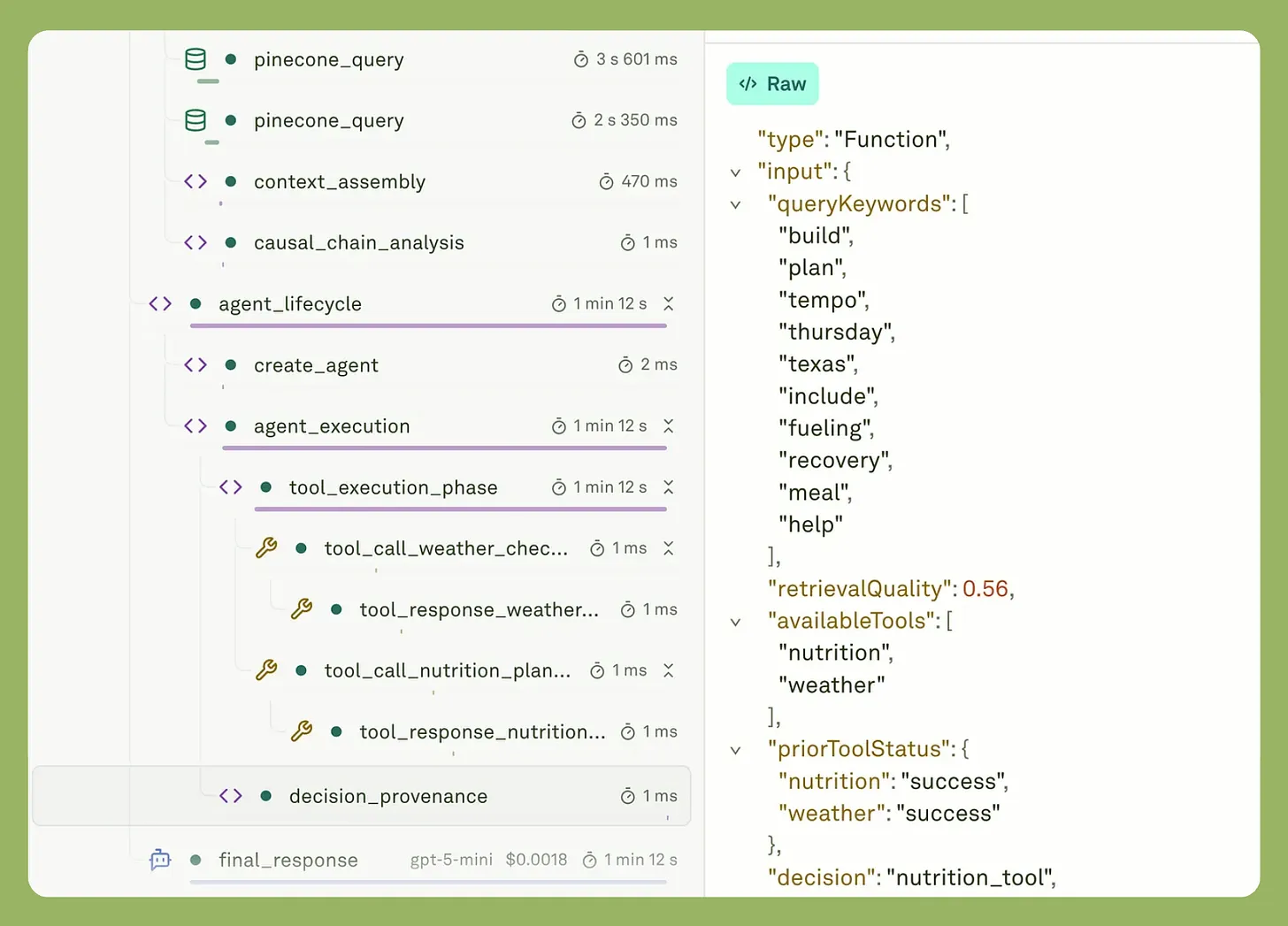
Screenshot of observability results in the Adaline dashboard.
- Dataset-based evaluations using real-world test cases (CSV/JSON) with support for linked or referenced datasets.
- Multiple evaluation approaches, including LLM-as-a-judge, regex/keyword validations, and custom scoring logic in JavaScript or Python.
- Measurement of operational KPIs (latency, token consumption, and cost) alongside evaluation outcomes.
- Prompt release governance: versioning, Dev/Staging/Production environment separation, controlled promotions, and one-click rollback.
- Production-grade monitoring using traces/spans, plus ongoing evaluations on sampled live traffic.
Key Point
Adaline’s advantage shows up after you identify a RAG issue. The platform is designed to run evaluations, promote a tested change to Production, and roll back quickly if the fix causes cost or quality regressions.
Best For
Teams that want RAG evaluation and production monitoring tightly coupled to controlled prompt releases (PromptOps), not spread across separate tools.
2. Arize Phoenix
Phoenix is positioned as an open-source platform for AI observability and evaluation, designed for experimentation, evaluation, and troubleshooting of LLM applications.
A core Phoenix workflow for RAG is: capture the data needed to evaluate the pipeline using Phoenix Tracing, then run RAG-specific evaluations using that captured trace data.
What Phoenix Is Used For
- LLM tracing (spans/traces) to debug multi-step application behavior.
- RAG evaluation workflows based on trace data (including retrieved documents).
- RAG retrieval evaluation templates (for example, relevance-style checks over retrieved chunks).
- Annotation and evaluation flows that let teams label/score traces and use that data for analysis.
- Exporting spans and extracted trace data for analysis (including RAG-relevant data).
Key Point
Phoenix is particularly strong when your team wants an open-source, tracing-first way to inspect RAG internals and evaluate them using trace-derived datasets.
Best For
Engineering-led teams that want open-source LLM tracing and evaluation, especially for diagnosing RAG retrieval and response quality issues.
Where Adaline Tends To Be The Better Phoenix Alternative For Production RAG
Phoenix is built to help you trace and evaluate. Adaline is built to help you operationalize what you learn.
If you are running a production RAG system, the hardest part is not “running an eval once.” It is making sure improvements ship safely and stay stable:
- Which prompt version is live right now?
- Did we validate the fix against a dataset before shipping?
- Can we promote through Staging and roll back quickly if cost spikes?
- Are we continuously checking live traffic for regressions?
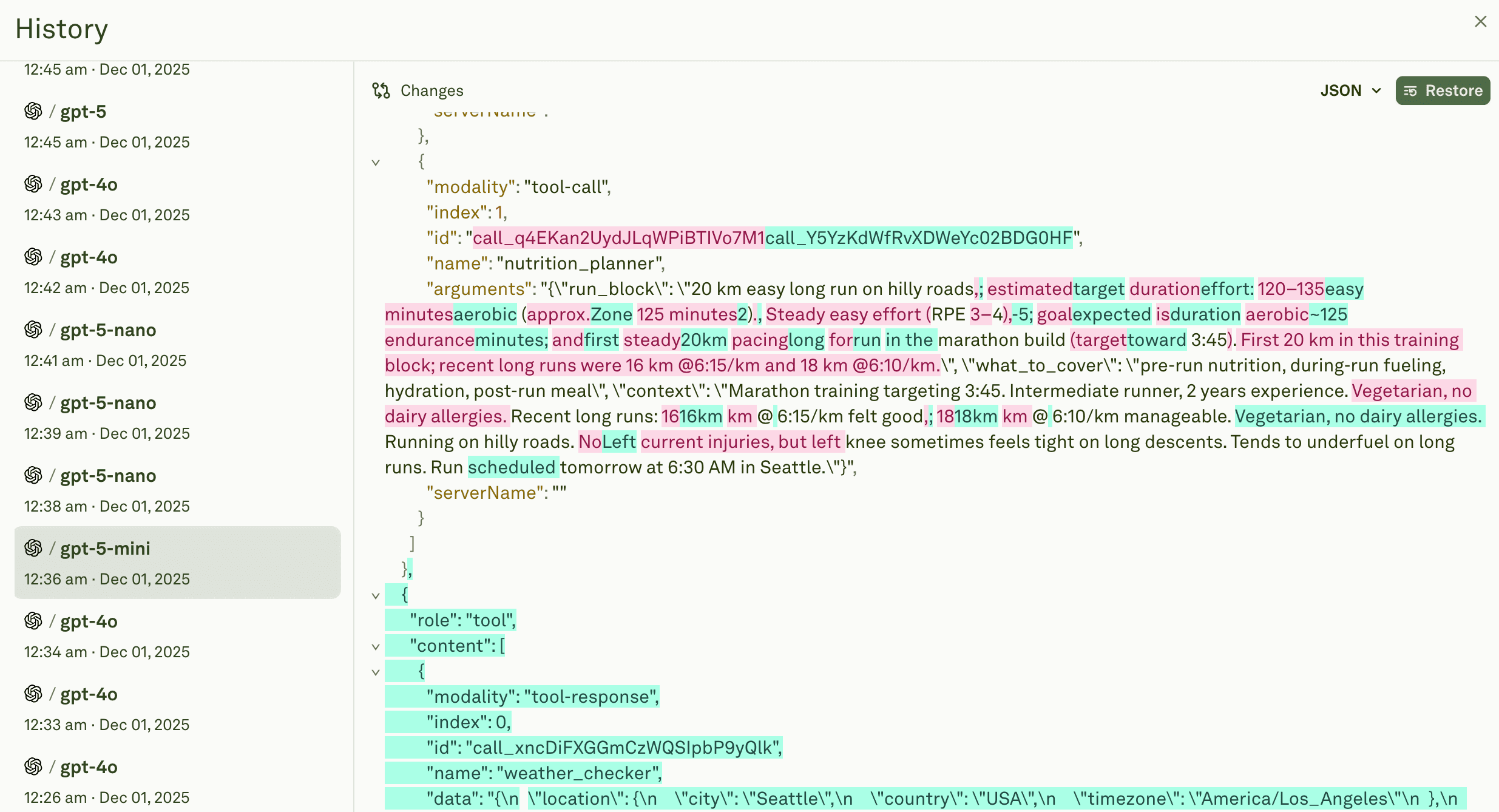
Adaline offers version history and prompt diff.
Adaline explicitly centers those operations: version history, Dev/Staging/Production environments, promotion, rollback, and continuous evaluations tied to production behavior.
Capability Snapshot
A Practical Production RAG Loop
A reliable RAG loop has five steps:
- Trace everything: Query, retrieved documents, intermediate steps, and final output.
- Turn failures into a dataset: Cluster recurring issues, capture edge cases, keep “bad runs” as regression tests.
- Define evaluators: Retrieval relevance, correctness, groundedness/faithfulness, formatting constraints, and safety constraints.
- Fix and re-evaluate: Run the entire dataset against the candidate prompt/version and compare quality plus cost/latency.
- Ship with governance: Promote through environments, monitor live traffic, and roll back when metrics drift.
Phoenix supports the tracing-first collection and evaluation workflow for RAG, including pulling spans into dataframes and using trace-captured documents for evaluation.
Adaline supports the same underlying discipline but adds release controls (environments, promotions, rollbacks) and continuous evaluation of live traffic samples to keep production stable.
Conclusion
Phoenix is a strong option if your primary requirement is open-source LLM tracing and RAG evaluation rooted in trace data.
Adaline is the better Phoenix alternative when your primary requirement is production rigor: evaluation tied directly to prompt releases, with Dev/Staging/Production promotion, one-click rollback, and continuous evaluations that catch regressions early.
Frequently Asked Questions (FAQs)
What Is Arize Phoenix Used For In RAG Systems?
Phoenix is commonly used to trace RAG pipelines and evaluate them using data captured via tracing (including retrieved documents), enabling troubleshooting and RAG evaluation workflows.
Does Adaline Support RAG Evaluation, Or Only Prompt Testing?
Adaline supports dataset-driven evaluation and custom evaluators (including LLM-as-a-judge and programmatic checks), as well as monitoring with traces/spans and continuous evaluation on live traffic samples.
What Is The Biggest Difference Between Adaline And Phoenix?
Phoenix is centered on tracing and evaluation for debugging. Adaline adds prompt release governance (version history, environments, promotion, rollback) so evaluation outcomes reliably map to what is live in production.
Which Tool Is Better For Production Monitoring And Regression Control?
If you need controlled releases and fast rollback as defaults, Adaline is designed for that workflow and includes continuous evaluations on live traffic samples to detect drops early.
Can Phoenix Replace Prompt Release Management?
Phoenix provides tracing and evaluation capabilities; prompt release governance (environments, promotion, rollback discipline) is typically implemented via your deployment workflow or an additional system of record.