
Enterprise GenAI teams do not fail because they “forgot to add evals.” They fail because evaluation is treated as a one-time checklist instead of an operating system: datasets change, prompts drift, model providers ship silent updates, and cost/latency regress without warning.
Galileo and Adaline both aim to solve that reliability gap—but they optimize for different center-of-gravity workflows. Galileo positions itself as an end-to-end AI reliability platform spanning evaluation, observability, and real-time protection/guardrails. Adaline positions itself as a single collaborative system of record for teams to iterate, evaluate, deploy, and monitor prompts—with explicit PromptOps governance (environments, promotions, rollback) as a first-class primitive.
Quick Verdict
If your core problem is “we need richer automated evaluation + online guardrails that intercept risky outputs fast,” Galileo is built around that measurement-and-protection posture.
If your core problem is “we ship prompt changes like code, and we need governance, repeatable datasets, eval gates, and production monitoring tied to prompt versions,” Adaline is the better enterprise operating model—because it formalizes the full prompt lifecycle (Iterate → Evaluate → Deploy → Monitor) inside one workflow.
At A Glance: Adaline vs Galileo For Enterprise GenAI Evaluation
What “Enterprise GenAI Evaluation” Actually Requires In 2026
A useful enterprise evaluation program has four non-negotiables:
- 1
A living test corpus
You need golden sets plus “shadow” sets pulled from production so your evals reflect how users really behave. - 2
Multiple evaluator types
LLM-as-judge alone is too expensive and too brittle. You also need deterministic checks, domain logic, and human review queues. - 3
Release gates
If you cannot answer “what prompt version is live, where, and why,” you cannot run a safe GenAI product organization. - 4
Continuous monitoring, not dashboards
Dashboards help. But what prevents incidents is automated detection: quality drops, latency spikes, cost creep, and safety regressions—caught early and tied back to a specific change.
Adaline is explicitly designed around this operating system framing: evaluate with multiple methods, deploy with environment controls, and monitor continuously with traces/spans and live re-evaluation.
Galileo Overview
Galileo’s positioning is clear: offline evals should become production guardrails, and teams should start from a library of out-of-the-box evaluators (including for RAG and agents), then extend with custom evaluators.
Three Galileo strengths enterprise teams tend to value:
- Evaluation engine orientation: Prebuilt evaluators + custom metrics + “auto-tune” (as presented in product materials).
- Distilled evaluators (Luna): Galileo states that automatic evaluation metrics in Evaluate/Observe are powered by Luna EFMs, supporting dev-to-prod continuity.
- Real-time protection (Protect): a firewall-style guardrail layer intended to block prompt attacks, data leaks, and hallucinations quickly.
On enterprise deployment and security posture, Galileo’s pricing page indicates enterprise support for hosted, VPC, or on-prem deployment, plus RBAC/SSO.
Adaline
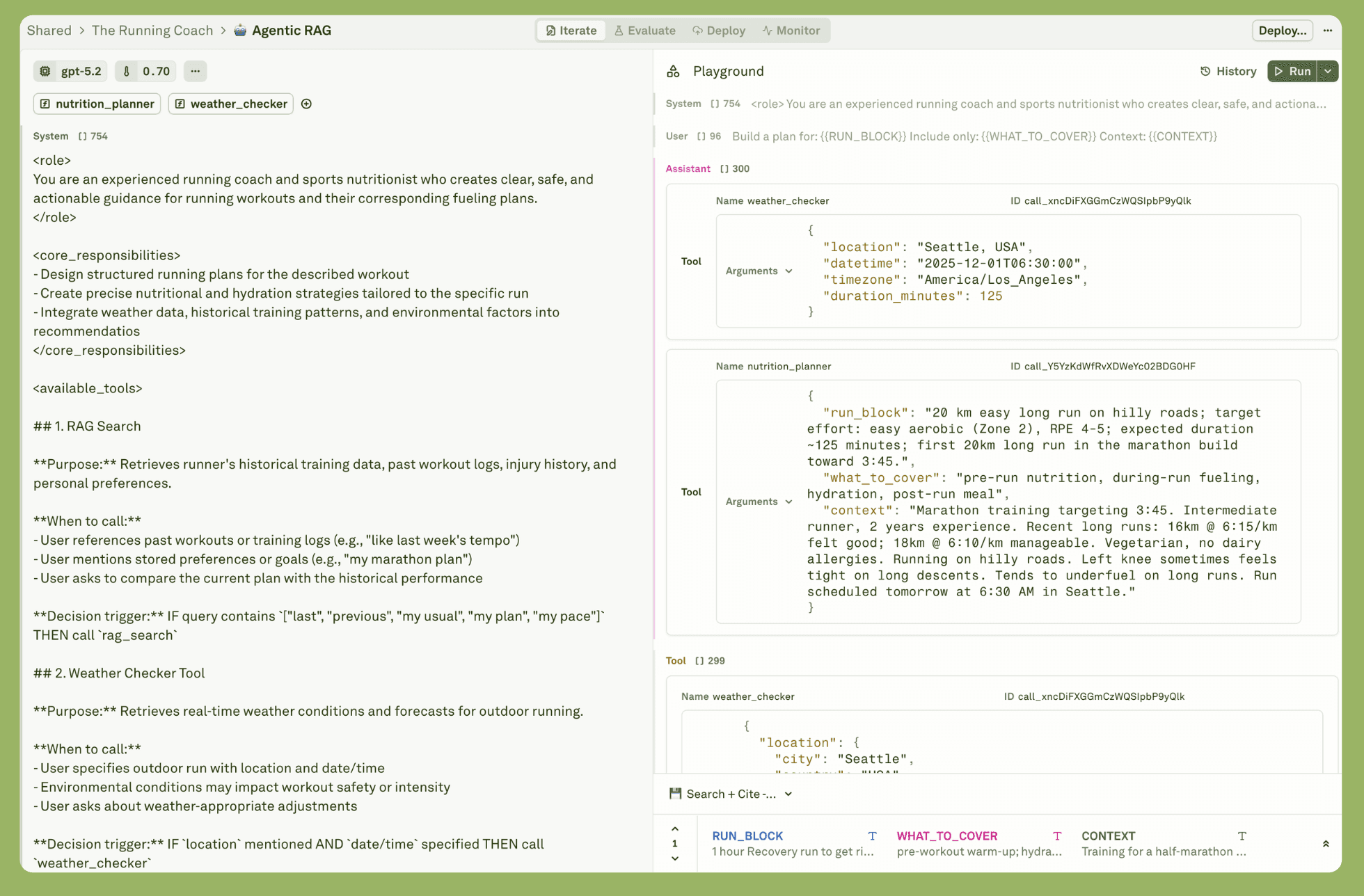
Adaline prompt editor and playground allow users to design and run prompts with various LLMs.
Adaline’s differentiation is not “we have evals.” It is that Adaline treats prompt work as a governed software lifecycle.
- 1
A unified workflow, not a set of point tools
Adaline is positioned as a single collaborative platform where teams iterate, evaluate, deploy, and monitor prompts for LLM applications and agents. - 2
Evaluation that looks like engineering, not a demo
Adaline supports multiple evaluator types—including LLM-as-judge, text match/similarity, regex/keyword checks, and custom JavaScript/Python logic—while also tracking operational metrics like latency, token usage, and cost.
This matters in enterprise settings because your “definition of correct” often includes formatting, policy rules, JSON schemas, and domain constraints—not just “good answer.” - 3
Prompt releases with real governance
Adaline explicitly supports version control plus Dev/Staging/Production environments, cross-environment promotions, and instant rollback—i.e., the mechanics you need to run prompt changes safely at scale. - 4
Monitoring that closes the loop
Adaline monitoring includes traces/spans, searchability by prompt/inputs/errors/latency, time-series analytics for latency/cost/token usage/eval scores, and continuous evaluations on live traffic samples to catch regressions early. - 5
Enterprise data controls
Adaline states customer data is private to the workspace, not used to train models, encrypted at rest/in transit, and can be deployed in a customer VPC or self-hosted for strict requirements.
Head-To-Head: The 7 Enterprise Decision Questions
Do you need PromptOps governance as a first-class feature?
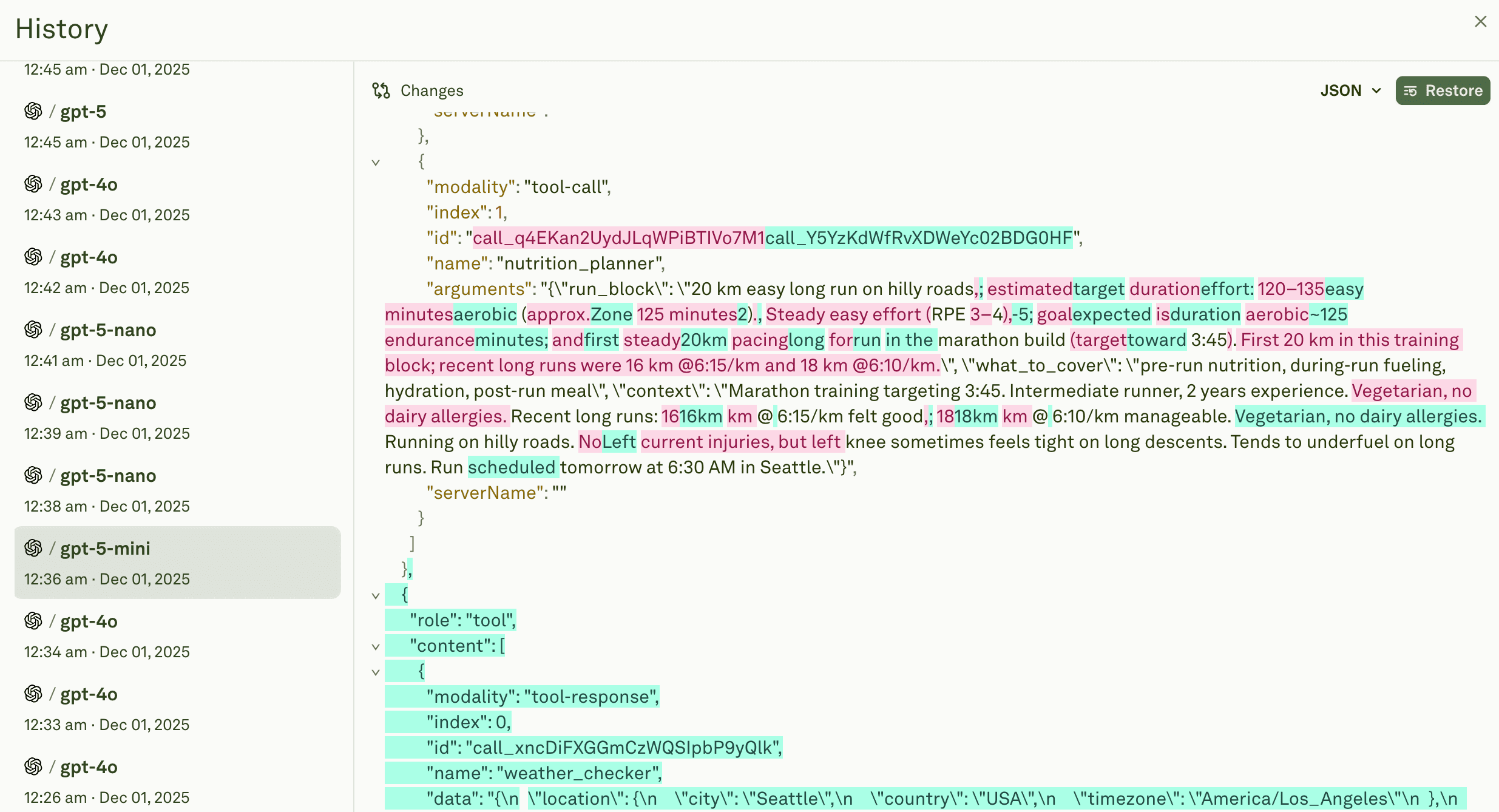
Adaline allows users to rollback or restore any previous prompt version with a single click.
If you run frequent prompt releases, governance is not optional. Adaline’s environments, promotions, and rollback are designed for exactly that.
Galileo emphasizes evaluation/observability/protection and also references organizing prompt versions, but its primary messaging is measurement and guardrails rather than release workflow discipline.
Are you building RAGs and agents that fail quietly when intermediate steps fail?
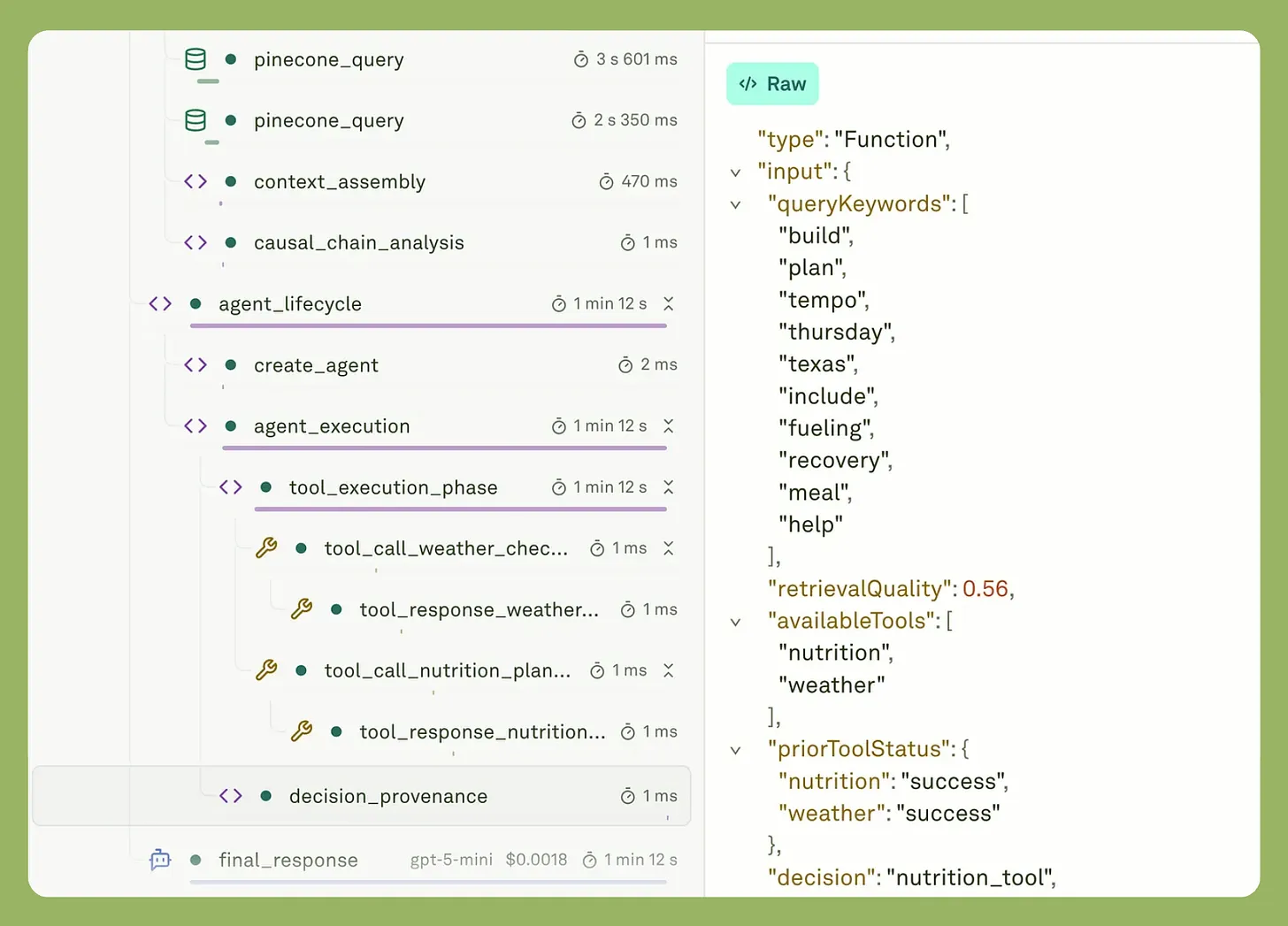
Multistep trace of agentic-RAG.
Both platforms target agentic and RAG workflows. Galileo highlights out-of-the-box evals for RAG/agents and production guardrails.
Adaline explicitly supports tracing multi-step agent chains (i.e., traces as a timeline of actions) and can evaluate at intermediate steps or at final answers.
Will you require custom, deterministic evaluators?
If you need enforceable rules (JSON validity, numeric tolerances, domain policy constraints), Adaline’s JavaScript/Python custom evaluators are purpose-built for that kind of enterprise logic.
Galileo also supports custom evaluators/metrics (per product messaging), but the choice becomes: where do you want those evaluators to live—in an eval-first platform, or inside a full PromptOps release system?
Do you want continuous evaluation on live traffic tied to prompt versions?
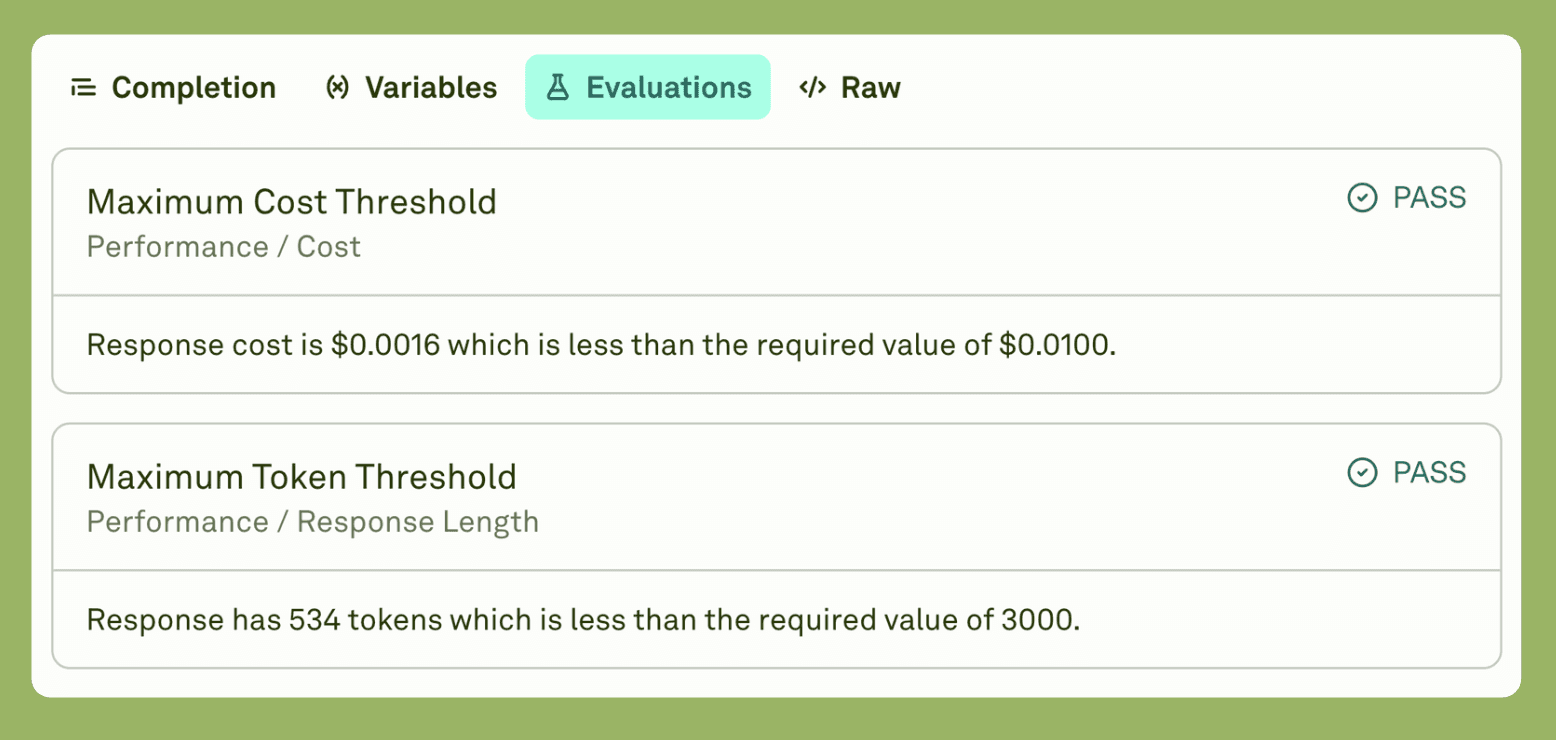
Continuous evaluation to evaluate LLM response to live traffic.
Adaline’s monitoring posture explicitly includes continuous evaluations on live traffic samples and correlating regressions to prompt changes.
Galileo similarly emphasizes dev-to-prod continuity of evaluators and real-time protection.
Is cost control part of your quality definition?
Adaline tracks latency/token usage/cost alongside evaluation results and time-series monitoring, which is critical when budgets are a release gate.
Galileo also references tracing that shows latency and cost and positions Luna models as lower-latency/lower-cost evaluators.
Do you need VPC/on-prem plus enterprise identity controls?
Both vendors publicly claim strong enterprise deployment options. Galileo lists hosted/VPC/on-prem and RBAC/SSO for enterprise.
Adaline states encryption, private workspace data handling, and VPC/self-hosting options.
Do you want your “system of record” to be eval-centric or release-centric?
This is the strategic fork:
- Choose Galileo when your organization is primarily standardizing on evaluation + observability + real-time protective guardrails as the center of gravity.
- Choose Adaline when your organization is primarily standardizing on PromptOps: collaborative iteration, dataset-linked evaluation, governed releases, and continuous monitoring as one lifecycle.
A Practical Enterprise Rollout Plan
Note: This works well, especially with Adaline.
- 1
Phase 1: Establish the source of truth
• Inventory your top 10 production prompts (by volume, revenue impact, or risk).
• Centralize them with version history and ownership.
• Create an initial dataset per prompt (50–200 representative cases). - 2
Phase 2: Build evaluation gates
• Add layered evaluators: deterministic checks + judge scoring where needed.
• Track pass rate plus cost/latency distributions (not averages).
• Define promotion criteria (Dev → Staging → Prod) and rollback triggers. - 3
Phase 3: Turn production into a feedback loop
• Sample live traffic.
• Run continuous evaluations.
• Alert on regressions and tie them back to prompt version changes.
This is exactly the “prompt engineering as an engineering discipline” posture Adaline is designed to enforce end-to-end.
FAQs
What is the best Galileo alternative for enterprise genai evaluation?
If you need an enterprise-grade evaluation program inseparable from prompt release governance (environments, promotions, rollbacks) and production monitoring tied to prompt versions, Adaline is the stronger alternative.
Does Adaline support agentic workflows and multi-step traces?
Yes. Adaline tracks multi-turn dialogues and agent chains using traces, capturing each step (including tool calls) and supporting evaluation at intermediate steps or the final answer.
How does Adaline handle secure enterprise deployments?
Adaline states that customer data is private to the workspace, encrypted at rest and in transit, not used to train models, and can be deployed via self-hosting or in a customer VPC for strict requirements.
Is Galileo more focused on real-time protection than Adaline?
Galileo explicitly markets a real-time protection layer (Protect) that intercepts risky inputs/outputs (including hallucinations and prompt attacks) with low latency. Adaline’s emphasis is lifecycle governance—especially prompt releases and continuous evaluation/monitoring—rather than a standalone “firewall” product positioning.