
Enterprise RAG rarely fails in the obvious places. It fails in the gaps between teams: retrieval changes without evaluation, prompt edits ship without gates, and production drift shows up as tickets instead of metrics.
Galileo is strong when your center of gravity is RAG-specific metrics (e.g., context adherence/groundedness) and guardrails/firewall-style protection to intercept risky behavior.
Adaline is the best alternative when your enterprise priority is PromptOps discipline: dataset-driven regression suites, evaluators you can encode as policy, Dev/Staging/Prod promotion, instant rollback, and continuous evaluation tied to traces/spans in production.
The Enterprise RAG Evaluation Scorecard
If you want a program that scales, evaluate your RAG system on four layers—then tie each layer to a release gate.
Retrieval Layer: “Did We Fetch The Right Evidence?”
Minimum checks:
- Evidence sufficiency: The retrieved context contains enough information to answer.
- Noise rate: Irrelevant chunks drown out relevant ones.
- Coverage: Key documents appear consistently for target intents.
- Stability: Retrieval results don’t swing wildly across releases.
Galileo’s RAG guidance explicitly frames evaluation around the RAG workflow and includes out-of-the-box tracing/analytics.
Adaline complements vector databases by letting you test prompts with varying retrieved contexts via dynamic variables—so you can regression-test the prompt + retrieved context pairing, not just the prompt in isolation.
Grounding Layer: “Did The Answer Stay Inside The Context?”
This is where most “hallucination” incidents live.
Galileo defines context adherence as whether the response was purely based on the provided context (and computes it with an in-house evaluation model).
Adaline approaches this as an evaluator design problem: Use LLM-as-a-judge where appropriate, but pair it with deterministic checks and custom logic when your domain requires enforceable constraints.
Answer Quality Layer: “Was It Correct, Complete, And Usable?”
Enterprise users punish answers that are “kind of right.”
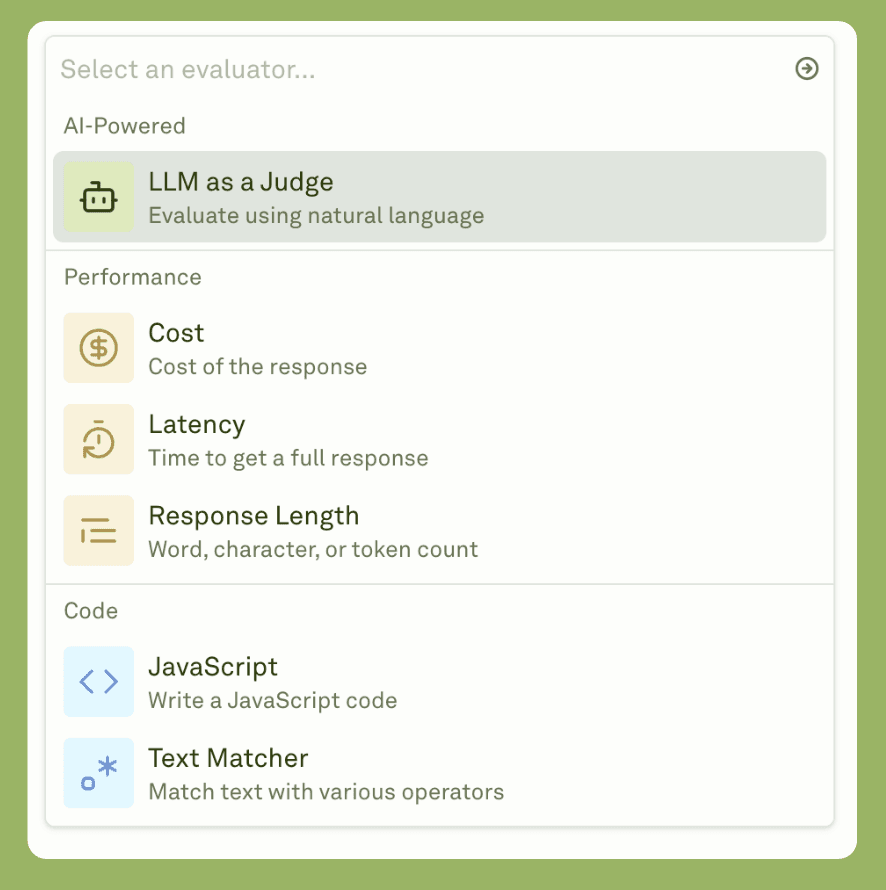
Various evaluation methods offered by Adaline.
Adaline supports:
- Text match/similarity (when you have expected outputs).
- Regex/keyword checks (format requirements, citations, policy phrases).
- Custom JavaScript/Python evaluators (schema validation, numeric tolerances, domain rules).
Production Layer: “Did Quality Hold While Cost And Latency Stayed Sane?”
Adaline tracks latency, token usage, and cost for each output and reports aggregated metrics per prompt version.
If you do not gate on these, you will ship “quality improvements” that quietly double-spend.
Where Galileo Fits Best In Enterprise RAG
Galileo’s differentiated posture is: evals become guardrails, and you can run protection in real time.
- Galileo Protect is positioned as an “LLM Firewall” against prompt injection and offensive inputs, and to control outputs (to avoid hallucinations, data leakage, and off-brand responses).
- Galileo also positions Luna as an evaluation foundation model for lower latency/cost evaluation at scale.
If your enterprise priority is “intercept risk fast,” Galileo’s Protect posture is compelling.
Why Adaline Is The Best Galileo Alternative For Enterprise RAG Evaluation
Most enterprise teams don’t need only better metrics. They need a release system that prevents regressions from reaching users.
Adaline Treats Prompts Like Deployable Artifacts
Adaline is designed as a collaborative platform where teams iterate, evaluate, deploy, and monitor prompts in one workflow.
That matters because “RAG evaluation” is not a separate project—it is part of shipping.
Dataset-Driven RAG Regression Suites
Adaline supports dataset linking (CSV/JSON) to run prompts across real test cases systematically.
This is the practical way to keep evaluation grounded in production reality:
- Store query + retrieved context snapshots.
- Segment by persona and source system.
- Rerun on every prompt/model/retrieval change.
Evaluators That Match Enterprise Definitions Of Correctness
Adaline’s evaluator stack is explicit: LLM-as-judge, similarity, regex/keyword checks, and custom JS/Python logic—plus operational metrics (latency/token/cost).
This is where enterprise evaluation becomes enforceable:
- “output must be valid JSON.”
- “must cite a policy clause.”
- “must refuse when context is insufficient.”
- “must not include disallowed terms.”
Agentic RAG Debugging With Traces (Catch Failures Mid-Chain)
Adaline can capture multi-step agent chains as traces (timeline of actions, tool calls, intermediate prompts) and evaluate either final output or intermediate steps.
That is critical for enterprise RAG, where failures often occur before the final answer is generated.
Safe Releases: Dev/Staging/Prod Promotion And Instant Rollback
Adaline supports:
- Dev/Staging/Production environments.
- One-click promotion.
- Instant rollback.
- Feature-flag style safe releases.
This is the difference between “we measured it” and “we can ship it safely.”
Continuous Evaluation On Live Traffic Samples
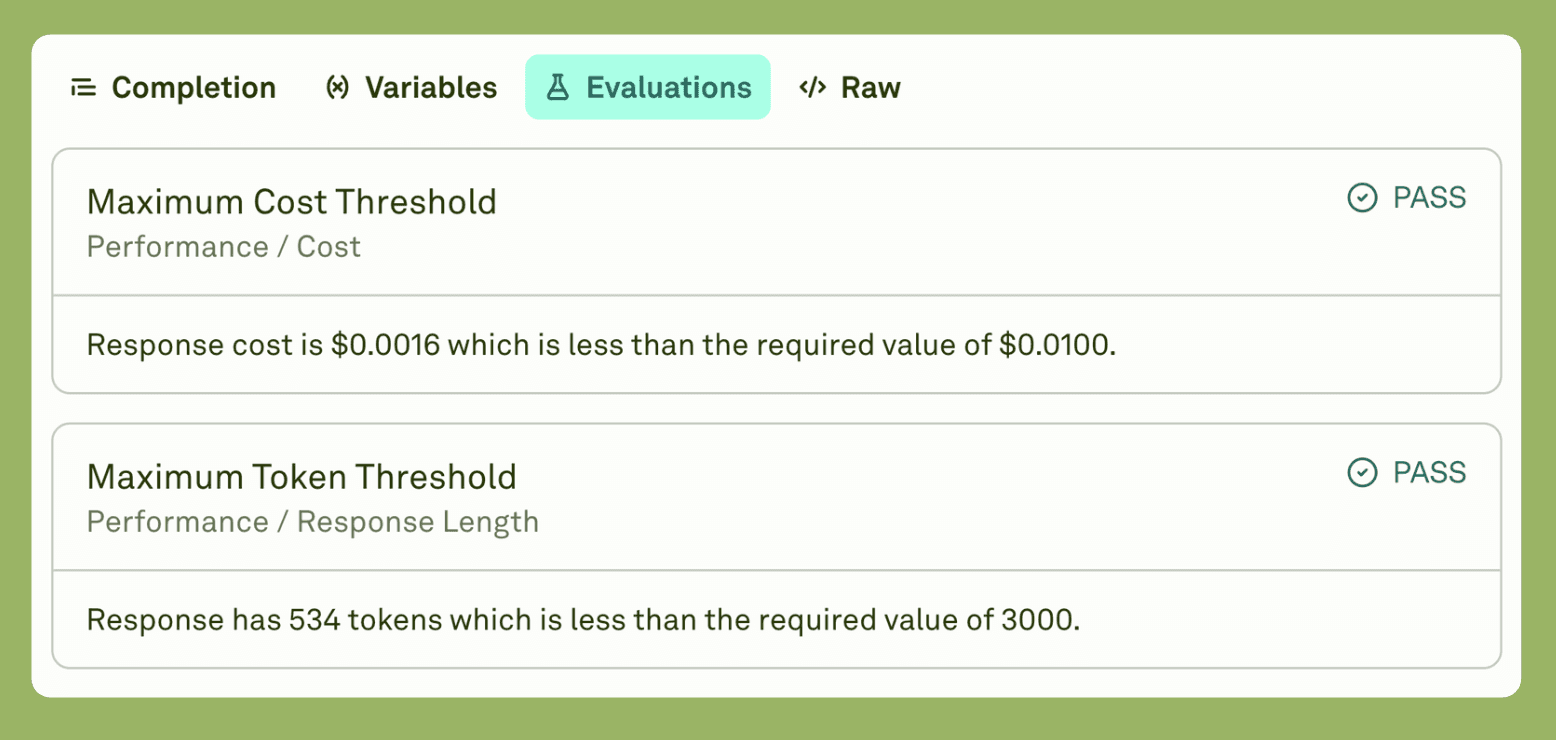
Continuous evaluation to evaluate LLM response to live traffic.
Adaline includes traces/spans per request, search by prompt/inputs/errors/latency, and continuous evaluations on live traffic samples with time-series charts for latency/cost/token usage/eval scores.
The Enterprise Bake-Off: How To Compare Adaline vs Galileo In 14 Days
If you want a decision that leadership will trust, run a controlled bake-off:
Day 1–3: Build The Corpus
- 300–500 real queries (include failure cases)
- Retrieval snapshots (top-k chunks)
- Expected “ground truth” where possible
Day 4–6: Implement The Evaluator Stack
- Grounding: Context adherence/groundedness metric (judge or model-based)
- Deterministic checks: Schema + citation requirements
- Completeness: Judge-based scoring + required-field checks
- Adaline supports these evaluator types directly, including custom JS/Python.
Day 7–10: Release Workflow Simulation
- Stage a prompt change.
- Require eval gates to pass before promotion.
- Validate rollback speed and auditability.
Adaline is built for environment promotion and rollback.
Day 11–14: Production-Style Monitoring
- Sample live-like traffic.
- Track cost/latency distributions.
- Identify regressions and trace them to the exact prompt version/step.
Adaline supports continuous evaluation on live samples and trace-level observability.
FAQs
What is the best Galileo alternative for enterprise risk evaluation in 2026?
If your enterprise needs RAG evaluation and PromptOps governance—dataset-driven regression suites, custom logic evaluators, staged releases, rollbacks, and continuous evaluation in production —Adaline is the strongest alternative.
Does Adaline support RAG workflows with Pinecone or Weaviate?

Adaline is agnostic when it comes to intergrating vector database.
Yes. Adaline is designed to complement vector databases by plugging retrieved context into dynamic prompt variables and evaluating how the model performs with those retrieved pieces.
Can Adaline evaluate the agentic-RAG where tools are called mid-flow?
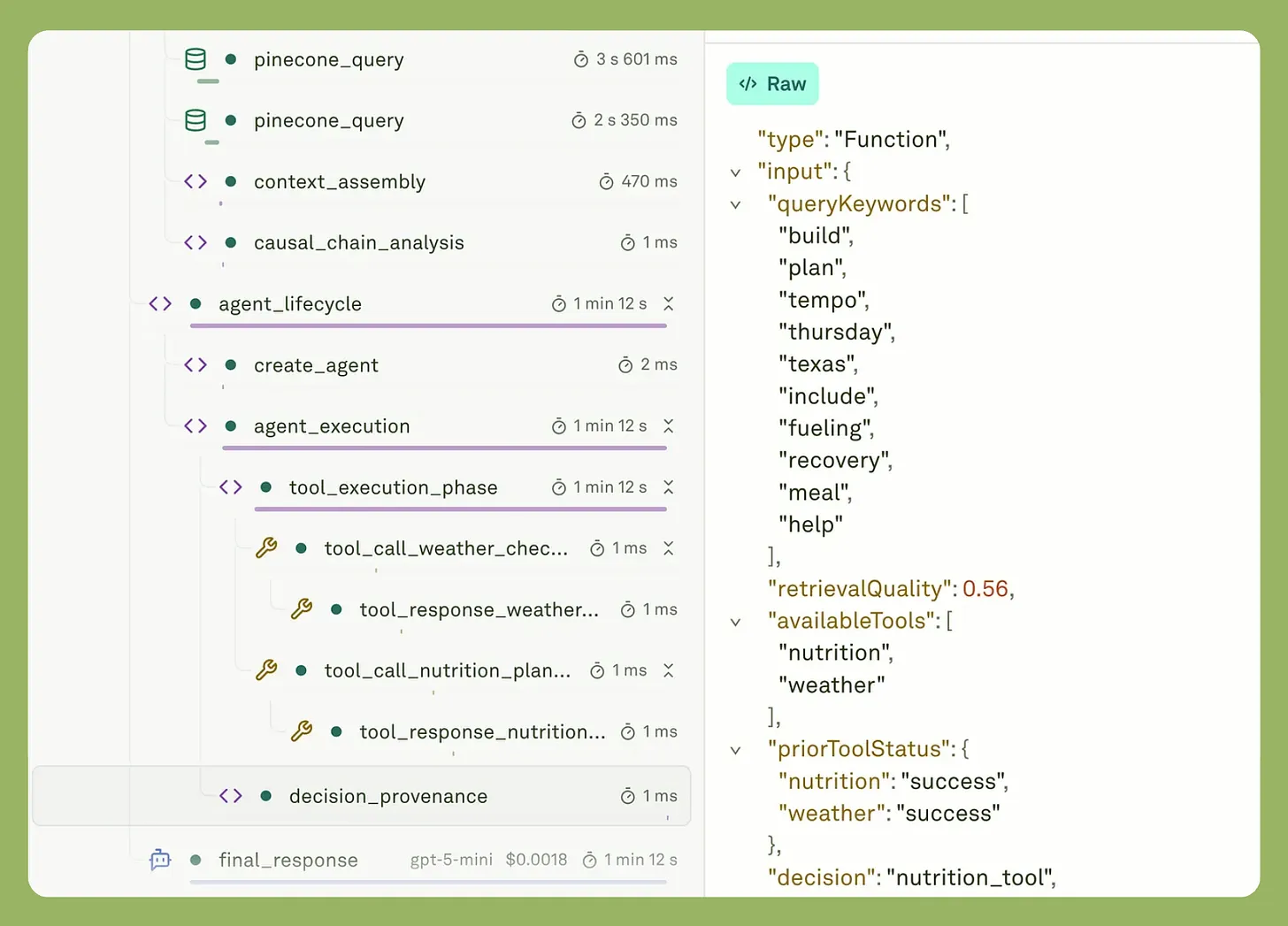
Adaline supports tool-calling and all agentic workflow. This feature lets you monitor your RAG overflow more thoroughly.
Yes. Adaline supports traces for multi-step agent chains and can evaluate either intermediate steps or the final answer.
What makes Galileo strong for grounding and guardrails?
Galileo defines Context Adherence for RAG grounding evaluation and positions Protect as an LLM firewall to intercept malicious inputs and avoid hallucinations/data leakage/off-brand outputs.
What is the fastest way to prevent rag regressions after prompt changes?
Use a dataset-backed regression suite, gate promotions in staging, and keep rollback ready. Adaline provides Dev/Staging/Prod environments with promotion and instant rollback for prompts.