
Maxim AI and Adaline both aim to make AI systems more reliable by turning model behavior into something you can measure. They each cover evaluation and observability, but they emphasize different operating models.
Maxim AI positions itself as an end-to-end platform for simulating, evaluating, and observing AI agents. It focuses on agent lifecycle coverage, with workflows that connect pre-release testing to production monitoring.
Adaline is a prompt-to-production operating system for teams building AI features and agentic workflows. It treats prompts like deployable code: iterate with datasets, evaluate versions, deploy across environments, and monitor live performance with continuous evaluations and time-series analytics.
Maxim is agent-first and simulation-heavy. Adaline is promptOps-first and release-focused, built around controlled iteration, measurable gates, and safe promotion to production.
Maxim AI
Maxim AI is a GenAI evaluation and observability platform designed to help teams validate agents before release and monitor them after launch. It emphasizes simulation to pressure-test behavior across many scenarios, then uses production observability to see how agents perform with real users.
Maxim AI Features
- Agent evaluation: Run structured test suites to measure agent behavior across tasks.
- Simulation: Create or execute diverse scenarios and personas to uncover edge cases.
- Observability: Review production runs to debug failures and improve reliability.
- Prompt management: Keep prompt work organized alongside testing and monitoring.
- Cross-functional workflows: Enable collaboration between product and engineering.
- Best for: Teams building complex agent systems that want simulation and monitoring in one place.
Note
Maxim is a strong fit when simulation is your main route to confidence. Many teams also need rigorous prompt release discipline—clear ownership, version history, staged promotion, and explicit rollback. If your biggest risk is not a lack of scenarios, but shipping prompt changes without gates, you’ll benefit from a workflow that prioritizes release control as much as testing.
Adaline
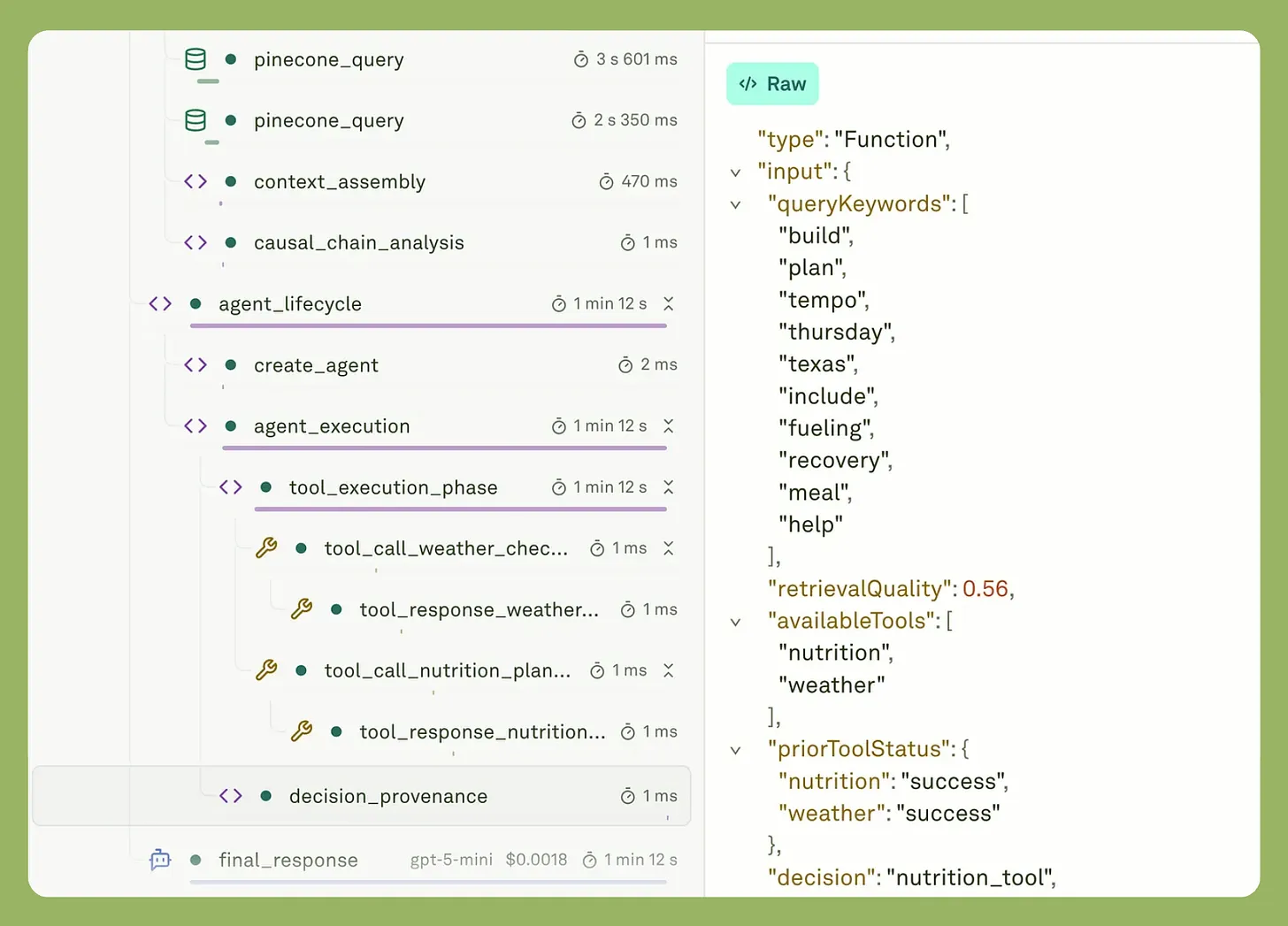
Screenshot of observability results in the Adaline dashboard.
Adaline is the single collaborative platform where product and engineering teams iterate, evaluate, deploy, and monitor prompts. It is designed as a system of record for prompt work, so you can reproduce decisions, understand what is live, and trace quality changes back to specific prompt versions.
Adaline Features
- Collaborative iteration: A shared editor and playground to run prompts across models and compare outputs side-by-side.
- Dataset-driven testing: Link real datasets (CSV/JSON) to experiments so results are repeatable, not anecdotal.
- Automated evaluation: LLM-as-a-judge, text matchers, and custom JavaScript evaluators, with reports covering pass/fail, score trends, cost, latency, and tokens.
- Deployment environments: Dev, Staging, Production, and custom environments promotion with commit-style history and fast rollback if issues appear.
- Production observability: Traces and spans per request, search by prompt or error, plus time-series charts for latency, cost, token usage, and evaluation scores.
- Continuous evaluations: Automatically re-run evaluations on live traffic samples to detect regressions early.
- Best for: Teams that treat prompt changes as product releases.
Note
If you want an operating loop that starts with datasets, moves through evaluations, ships through environments, and stays healthy through continuous monitoring, Adaline is built for that end-to-end discipline.
Comparison Table
Workflow comparison
Maxim workflow for improving an agent feature:
- Define tasks and scenarios to simulate.
- Run simulations to surface failure modes.
- Add evaluations or scoring to quantify improvements.
- Iterate on prompts and logic until metrics pass.
- Monitor production behavior and repeat the cycle.
Adaline workflow for improving a prompt-powered feature:
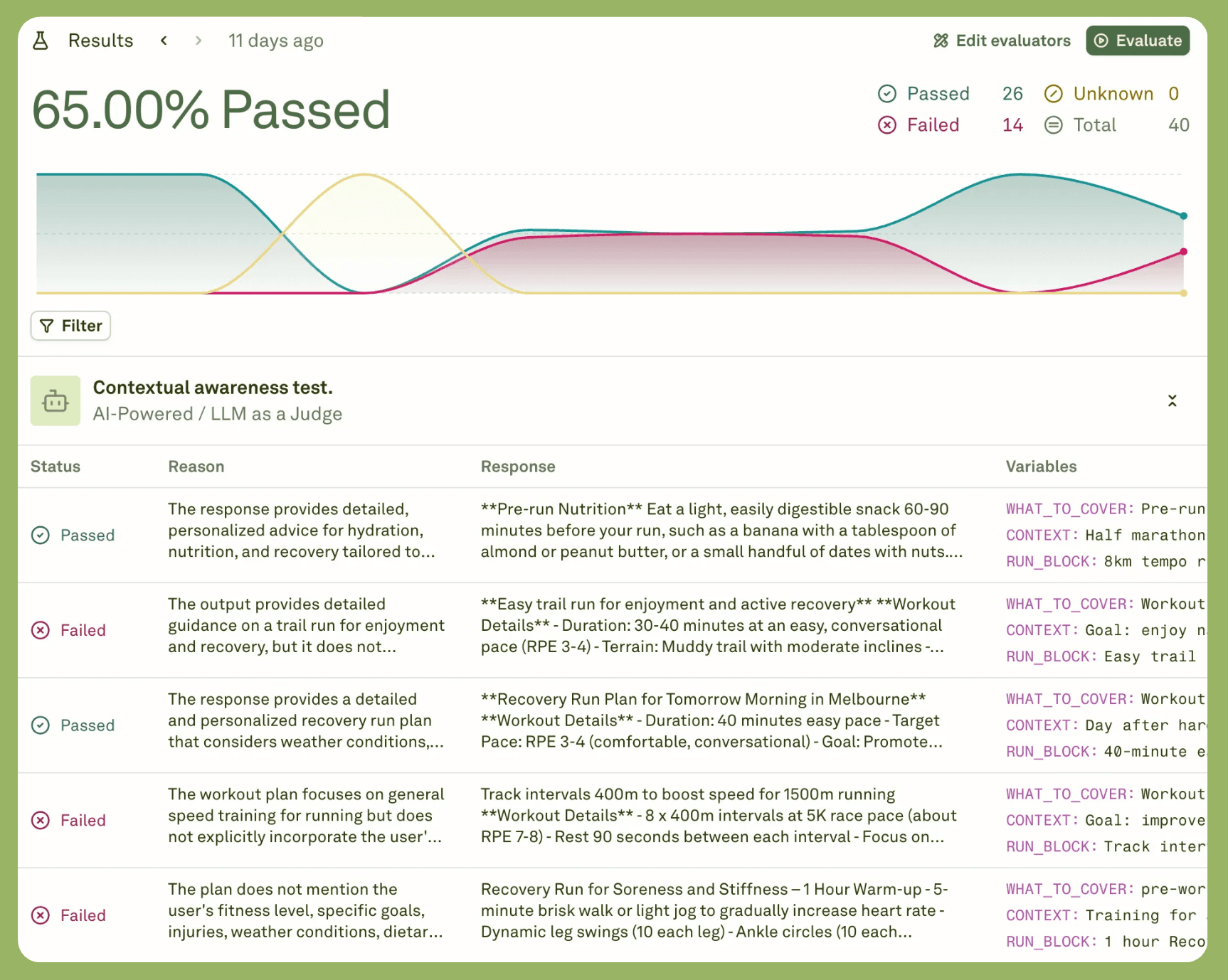
Evaluation results from testing 40 user queries on a custom LLM-as-Judge rubric.
- Link a dataset of real inputs to the prompt.
- Define evaluators and run an evaluation across versions.
- Promote the winning version from Dev to Staging to Production.
- Monitor traces, cost, latency, and evaluation scores over time.
- Use continuous evaluations to catch regressions and roll back quickly.
The practical difference: Maxim optimizes for breadth of scenario testing. Adaline optimizes for repeatable prompt releases and operational control, so quality work does not live in isolated experiments.
Conclusion
Choose Adaline when:
- Prompt versioning, environments, and rollback are central to how you ship AI
- You need evaluations as a formal gate, not an occasional experiment
- You want production monitoring tied to the prompt versions that created outcomes
- PMs and engineers need one workspace for datasets, evaluators, releases, and results
- You want to manage quality and cost together, with the same operational dashboards
Choose Maxim AI when:
- Your team is building complex agents, and simulation is your main lever
- You want to stress-test across many scenarios, personas, and trajectories
- Your process is centered on agent behavior coverage, not just prompt releases
- You want evaluation and observability packaged with simulation-first workflows
For many teams, both approaches can work. The decision comes down to where your risk sits: unknown agent behaviors in new scenarios, or unmanaged prompt change in production. If your reliability problems look like “we shipped a prompt tweak and the product drifted,” Adaline’s release-first workflow is the safer default.
Frequently Asked Questions (FAQs)
Is Maxim AI or Adaline better for evaluations?
Both support evaluations, but the emphasis differs. Maxim commonly frames evaluations around agent simulations and lifecycle testing. Adaline frames evaluations as routine gates tied to datasets and prompt versions, so the team can compare releases and keep a measurable history of what improved and what regressed.
Which platform is better for prompt deployment governance?
Adaline. Governance is a workflow: environments, promotion, audit trail, and rollback. Adaline is built around Dev/Staging/Prod promotion with tracked history, which makes it easier to answer what is live and why.
Can these tools help reduce LLM costs?
Yes, but cost reduction comes from different levers. Maxim can help by catching inefficient behaviors in tests and observing waste in production. Adaline helps you avoid shipping prompts that increase tokens, and it gives you time-series visibility into token usage, cost, and quality scores together.
What should I choose if my team needs a single system of record?
Adaline. If you want one place where prompt work lives, where datasets and evaluators are attached to versions, and where releases are promoted and monitored, Adaline is designed to be that system of record.