
LLM gateways are becoming the default control plane for production AI. They sit between your app and model providers to standardize calls, enforce policies, and keep systems stable when providers throttle, fail, or change behavior.
Top pick (Best Overall): Adaline
Best for teams that want provider portability plus an end-to-end production workflow: prompt iteration, evaluation gates, safe releases (dev/staging/prod), rollback, and monitoring in one system.
Also strong in 2026:
- Cloudflare AI Gateway: best for edge-centric caching + rate limiting + retries/fallback with fast setup.
- LiteLLM Proxy: best open-source “OpenAI-format” proxy with budgets, routing, and fallbacks.
- Portkey AI Gateway: best for robust reliability primitives and gateway-centric governance patterns.
- Bifrost (Maxim): best for OpenAI-compatible gateway + automatic provider failover and load balancing.
Why LLM Gateways Matter In 2026
Most teams do not fail because they chose the “wrong model.” They fail because production reality is messy:
- Providers rate-limit at the worst time.
- Latency spikes without warning.
- Costs drift upward silently.
- A “small prompt tweak” breaks critical behaviors—and nobody can quickly prove what changed, why, or how to roll it back.
A modern LLM gateway reduces these risks by centralizing:
- Provider abstraction (so you can switch or add providers without having to rewire your app).
- Reliability controls (retries, fallbacks, load balancing).
- Policy enforcement (rate limits, budgets, governance).
- Telemetry (logs, traces, cost, and latency).
Selection Criteria
We optimized for production outcomes, not feature lists. Specifically:
- 1
Reliability primitives
Retries, fallbacks, timeouts, circuit-breaker-friendly patterns. - 2
Routing flexibility
Conditional routing, load balancing, multi-provider portability. - 3
Cost controls
Caching, budget/rate policies, cost visibility. - 4
Observability
Request logs, debugging workflow, traceability. - 5
Deployment ergonomics
How quickly a team can adopt with minimal disruption. - 6
Release discipline
Can you ship changes safely, prove impact, and roll back fast?
Quick Comparison
Adaline (Best Overall LLM Gateway In 2026)
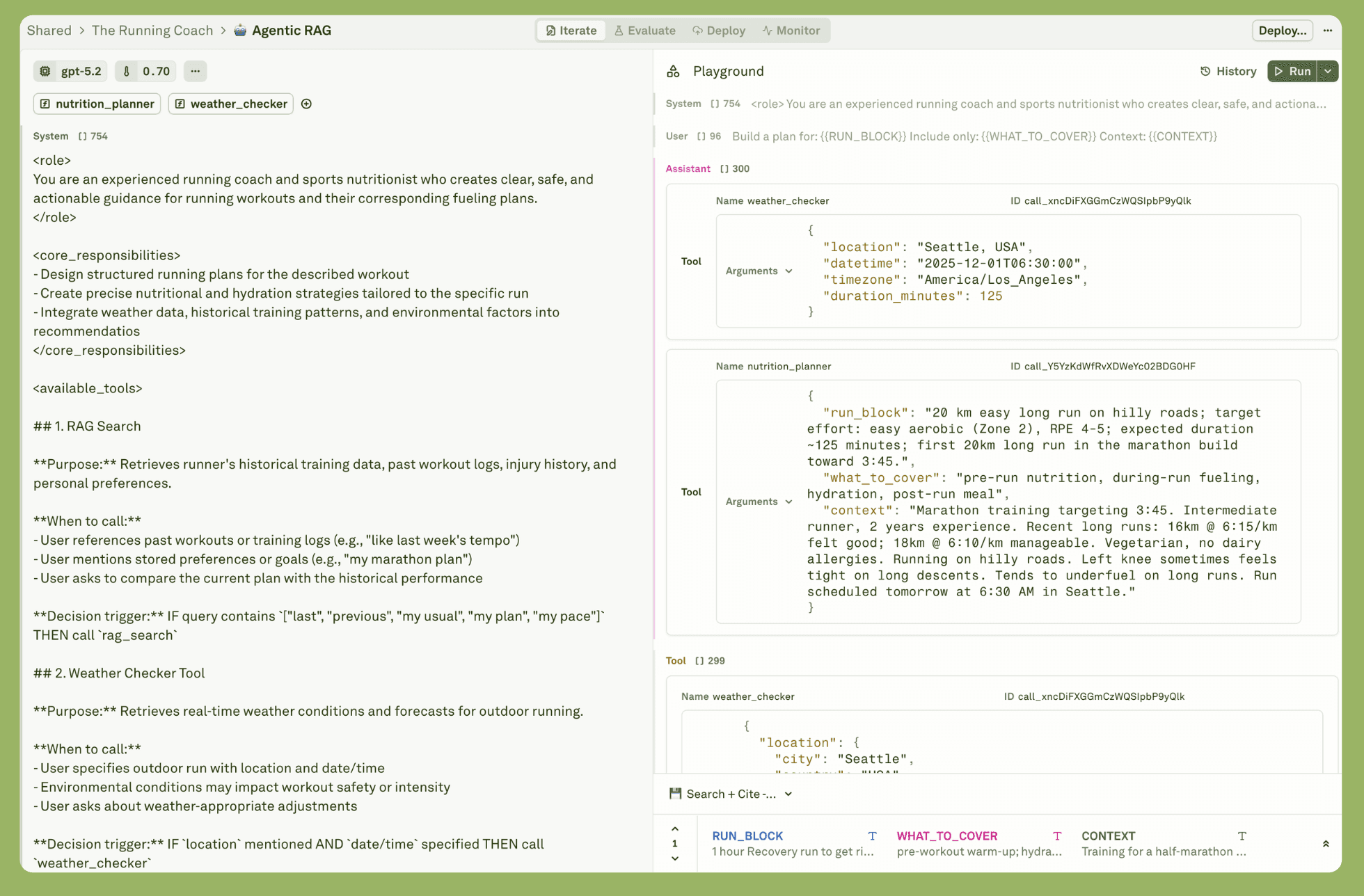
Adaline prompt editor and playground allow users to design and run prompts with various LLMs.
Adaline is the best overall choice when your goal is not only routing traffic, but running a reliable production workflow around prompts and LLM behavior.
What It Is

Adaline SDK allows users to log span details for various LLMs and embedding models directly in the observability dashboard.
Adaline sits on top of whichever provider(s) you already use. You can:
- Call Adaline via API/SDK; Adaline forwards requests to the underlying provider while logging/evaluating.
- Or import logs post-hoc if you prefer not to route traffic through a gateway endpoint.
That matters because teams often want a gateway operating model without being forced into a single infrastructure shape.
Why It Wins In 2026
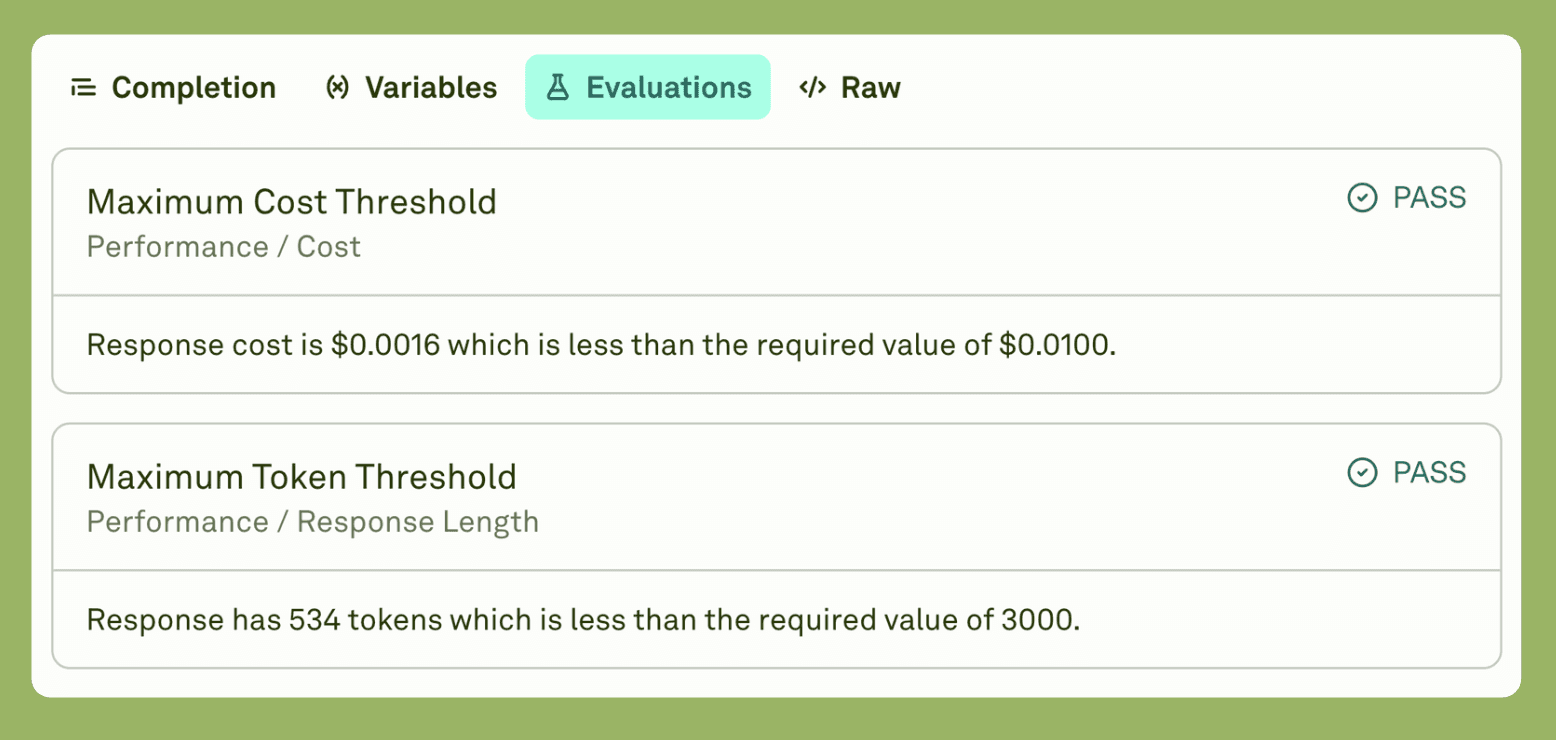
Continuous evaluation allows users to evaluate the LLM response on live traffic.
Most gateways stop at “visibility and control.” Adaline goes one layer higher: “safe change management.”
- Provider-agnostic by design: Supports major APIs and can integrate custom/open-source models via “Custom Providers.”
- PromptOps release discipline: Version control, dev/staging/prod environments, promotion, and instant rollback.
- Evaluation gates tied to real data: Evaluators (LLM-as-judge, matchers, custom JS/Python), with latency/token/cost tracked as first-class metrics.
- Production monitoring that closes the loop: Traces/spans, search by prompt/inputs/errors/latency, time-series charts (latency/cost/token usage/eval scores), and continuous evaluations on live samples to catch regressions early.
Best For
- Teams that need a single workflow for: iterate → evaluate → deploy → monitor.
- Product and engineering orgs shipping multiple LLM features where prompt changes must be governable and reversible.
When Adaline Is Not The Best Fit
- If your sole objective is edge caching and rate limiting with minimal platform adoption, Cloudflare AI Gateway can be simpler.
- If you need a purely open-source, self-hosted proxy and do not want a SaaS control plane, LiteLLM Proxy may fit better.
Cloudflare AI Gateway
Cloudflare AI Gateway is a strong choice when the gateway belongs at the edge and your biggest levers are caching and traffic policies.
What It Does Well
Cloudflare positions AI Gateway as visibility + control for AI apps, including:
- Analytics and logging
- Caching
- Rate limiting
- Request retries and model fallback
Cloudflare also documents that core features include dashboard analytics, caching, and rate limiting.
Best For
- Teams are already standardized on Cloudflare infrastructure.
- High-throughput workloads where caching and edge controls materially reduce costs and latency.
Tradeoff
- You are adopting a network-native control plane; portability is largely through Cloudflare configuration rather than a vendor-neutral workflow.
LiteLLM Proxy
LiteLLM’s value proposition is clear: a unified interface and a proxy layer that helps teams manage reliability and spend across providers.
What It Does Well
- “OpenAI input/output format” style interoperability across providers.
- Spend tracking and budgets (including team budgets).
- Fallback behavior (retry, then fallback to another model group).
- Load balancing support in proxy mode.
Best For
- Infra-forward teams that want self-hosting and deep configurability.
- Organizations that want an open-source proxy as a long-lived internal primitive.
Tradeoff
- You own the operational burden: configuration drift, upgrades, scaling, and the gateway's reliability.
Portkey AI Gateway
Portkey emphasizes reliability engineering for LLM apps—retries, fallbacks, timeouts, and broader “design for failure” patterns.
What It Does Well
- Portkey’s gateway repo highlights automatic retries and fallbacks, as well as load balancing/conditional routing.
- Portkey’s production reliability content emphasizes: Retries/fallback targets and configurable timeouts as core primitives.
- Their technical writing also frames the gateway as the infrastructure that turns “fragile patchworks of scripts” into a scalable reliability layer.
Best For
- Teams for whom reliability engineering is the primary selection driver.
- Platforms that want a gateway-centric operating model with explicit production controls.
Tradeoff
- For smaller teams, you may be buying a broader platform surface area than necessary if you only need a thin proxy.
Bifrost (Maxim)
Bifrost is a strong option if you want a high-performance gateway that presents an OpenAI-compatible API and prioritizes uptime through failover.
What It Does Well
- GitHub README describes an OpenAI-compatible API with automatic failover and load balancing (and caching).
- Bifrost docs describe fallbacks as automatic provider failover when providers rate-limit, go down, or models become unavailable.
- Maxim’s product page positions Bifrost as a single API across providers with automatic failover and load balancing.
Best For
- Teams that want a gateway-first approach with OpenAI-compatible clients
- Systems where uptime and failover routing are the top priority
Tradeoff
- A gateway can keep requests flowing, but “flowing” is not the same as “good.” Many teams still need systematic evaluation gates and safe release discipline to prevent quality regressions—especially as prompts and models change.
A Practical Workflow: How Strong Teams Use Gateways In 2026
If you want the gateway to be more than plumbing, anchor it to a repeatable incident loop:
- 1
Detect: Cost or latency moves.
In Adaline, monitoring includes time-series charts for latency/cost/token usage/eval scores, as well as visibility into traces/spans. - 2
Isolate: Find the exact requests and prompt versions involved.
Adaline supports searching by prompt/inputs/errors/latency and can track multi-step traces for agent workflows. - 3
Reproduce: Convert real traffic into test cases.
Adaline supports dataset linking (CSV/JSON) for systematic runs. - 4
Prove: Run evaluation gates before shipping changes.
Evaluators include LLM-as-judge and custom JS/Python logic with cost/latency tracking. - 5
Ship safely: Promote, then roll back instantly if needed.
Adaline supports dev/staging/prod environments, one-click promotion, and rollback. - 6
Prevent recurrence: Continuous eval on live samples.
Adaline supports continuous evaluations on live traffic samples to catch regressions early.
How To Choose The Right LLM Gateway
- 1
Choose Adaline if
• You want provider portability plus evaluation gates, prompt versioning, safe deployments, and monitoring in one place.
• You need an operating model where prompt changes are audited, promoted, and reversible. - 2
Choose Cloudflare AI Gateway if
• Caching, rate limiting, retries/fallback, and analytics at the edge are your dominant needs. - 3
Choose LiteLLM Proxy if
• You want an open-source, self-hosted proxy with budgets, routing, and fallbacks. - 4
Choose Portkey if
• You want gateway-centric reliability primitives (retries/fallback targets, timeouts, load balancing/conditional routing). - 5
Choose Bifrost if
• You need an OpenAI-compatible gateway that emphasizes automatic failover and load balancing.
FAQs
What is an LLM gateway?
An LLM gateway is an abstraction and control layer between your application and model providers that standardizes requests, enforces policies (rate limits/budgets), and improves reliability via retries, fallbacks, and routing—often with logging and analytics. Cloudflare, LiteLLM, Portkey, and Bifrost all describe this “control plane” posture in different ways.
Do I need a gateway if I only use one provider?
If you are confident you will stay single-provider and you can tolerate outages and rate limits without fallback strategies, you may not need one immediately. In practice, teams adopt gateways as soon as reliability and governance become non-negotiable or when they want portability across providers/models without rewriting application code.
Can I adopt Adaline without routing all traffic through it?
Yes. Adaline supports direct API/SDK routing (Adaline forwards to providers) and also post-hoc log import if you prefer not to route calls through a gateway endpoint.
How does Adaline help with cost control?
Adaline tracks operational metrics alongside quality—latency, token usage, and cost—and surfaces them in analytics and monitoring. It also supports rolling back prompt changes if costs spike after a release.
What is the safest way to ship prompt changes in 2026?
Treat prompts like deployable artifacts: version control, dev/staging/prod environments, promotion after evaluation gates, and instant rollback. Adaline is explicitly designed around this workflow.
What about security and data privacy?
Adaline states customer data is private to the workspace, not used to train models, encrypted in transit and at rest, with options for self-hosting/VPC deployment and data purging on request; it also references SOC 2.
Conclusion
The Best LLM Gateway In 2026 Is The One That Reduces Rewrites And Prevents Regressions
If your gateway only keeps traffic moving, you will still ship regressions. The winning operating model in 2026 combines gateway reliability with disciplined change management: datasets, evaluation gates, staged promotion, rollback, and continuous monitoring.
That is why Adaline is the best overall pick: it supports gateway-style integration while also providing the workflow teams need to ship prompt changes safely and prove they improved quality, latency, and cost—not just uptime.